School Laboratories

Dental Laboratory

DENTAL LABORATORIES PHANTOM UNITS

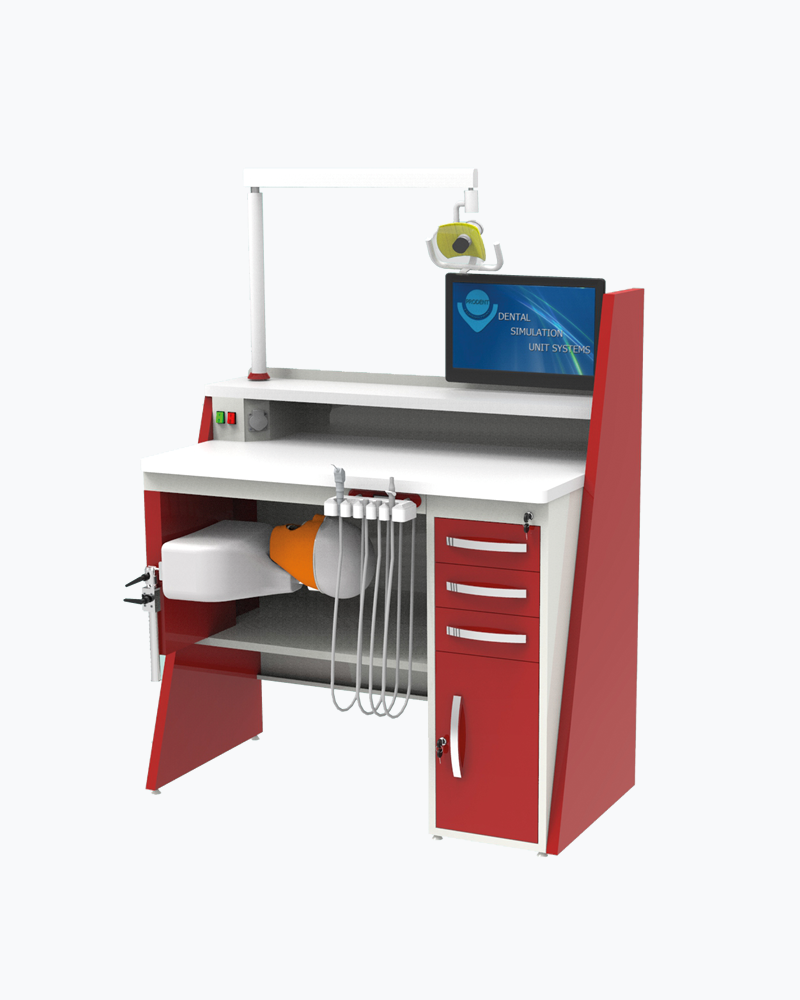
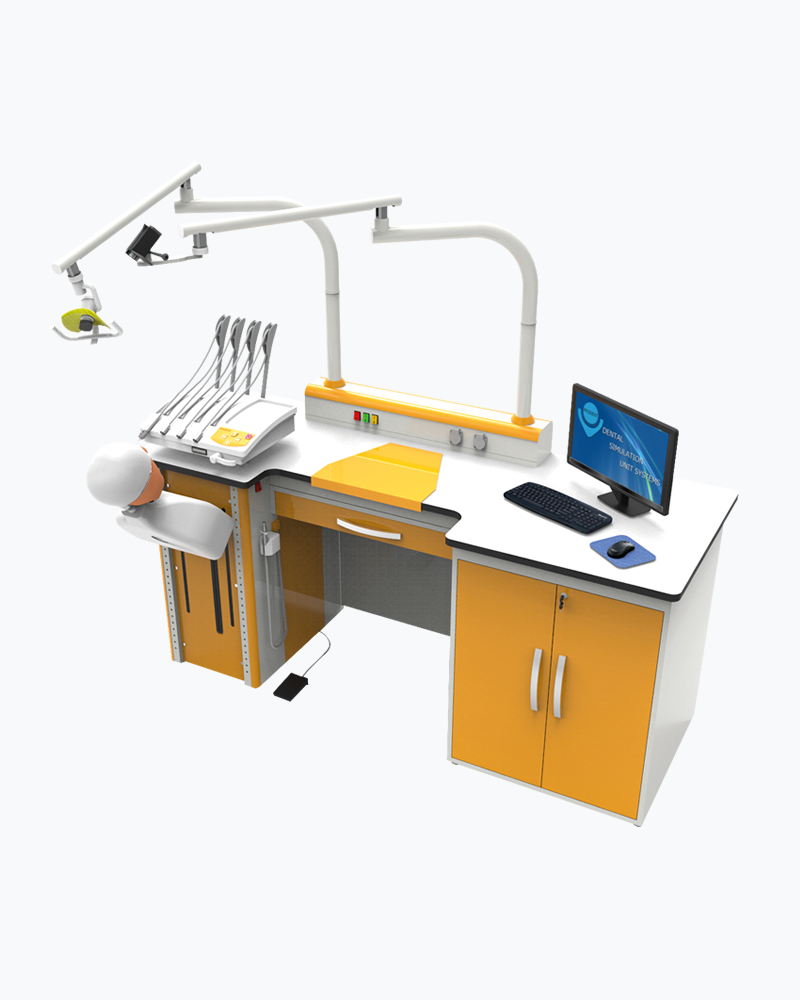
In dental education, phantom student units are important simulation tools designed to help students convert their theoretical knowledge into practice before starting clinical applications, thus enhancing the quality of education. These units precisely replicate the human jaw and oral structure, enabling learning of dental treatment procedures in a safe and controlled environment. Phantom student units are widely used from dental faculties to private dental laboratories and hold an indispensable place in modern education.

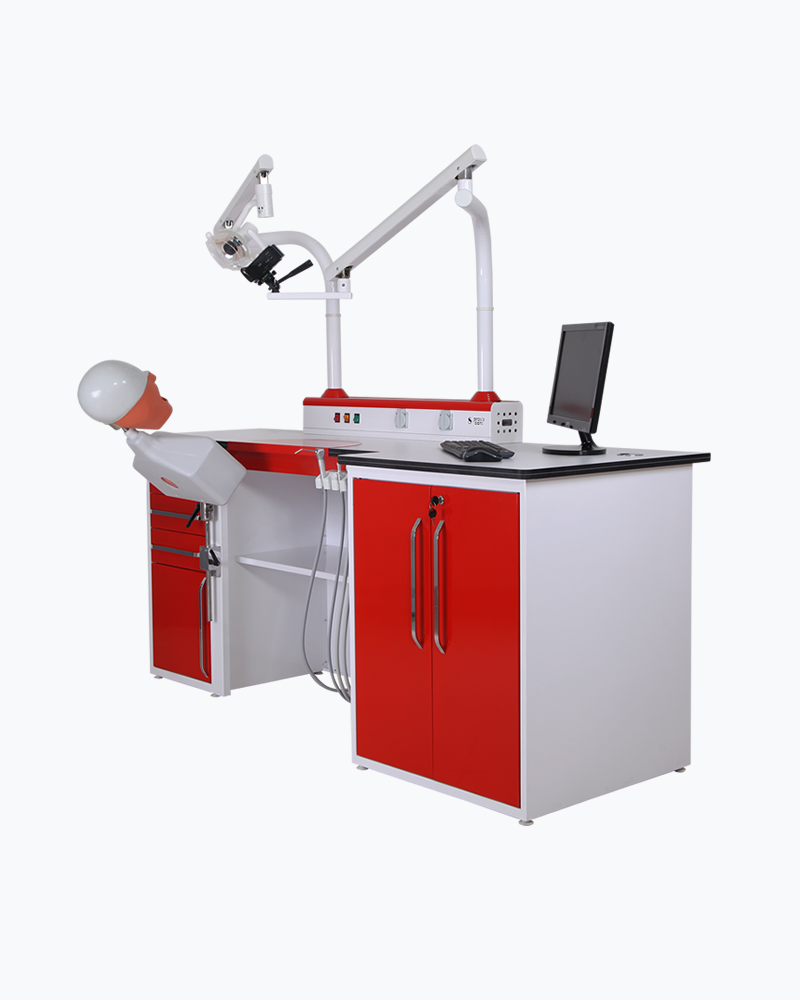
Dental laboratory teacher units provide a modern educational platform that allows instructors to closely monitor students’ applications, guide them when necessary, and manage the education process more effectively. These units work integrated with student phantom units, improving education quality and enabling instructors to give more comprehensive feedback.


LEARN MORE
Laboratory Solutions According to International Standards

Our dental laboratory unit models are manufactured in compliance with international standards.

  • ISO 14175: Standards for chemical resistance and mechanical durability.
  • EN 13150: Workbench dimensions and durability criteria.
  • SEFA 8: Surface durability and chemical resistance test standards.
  • TS EN ISO 9001: Quality management system standards.
  • DIN 12916: Tensile and compressive strength.
Designed to enable students to transform their theoretical knowledge into practice before starting clinical applications.
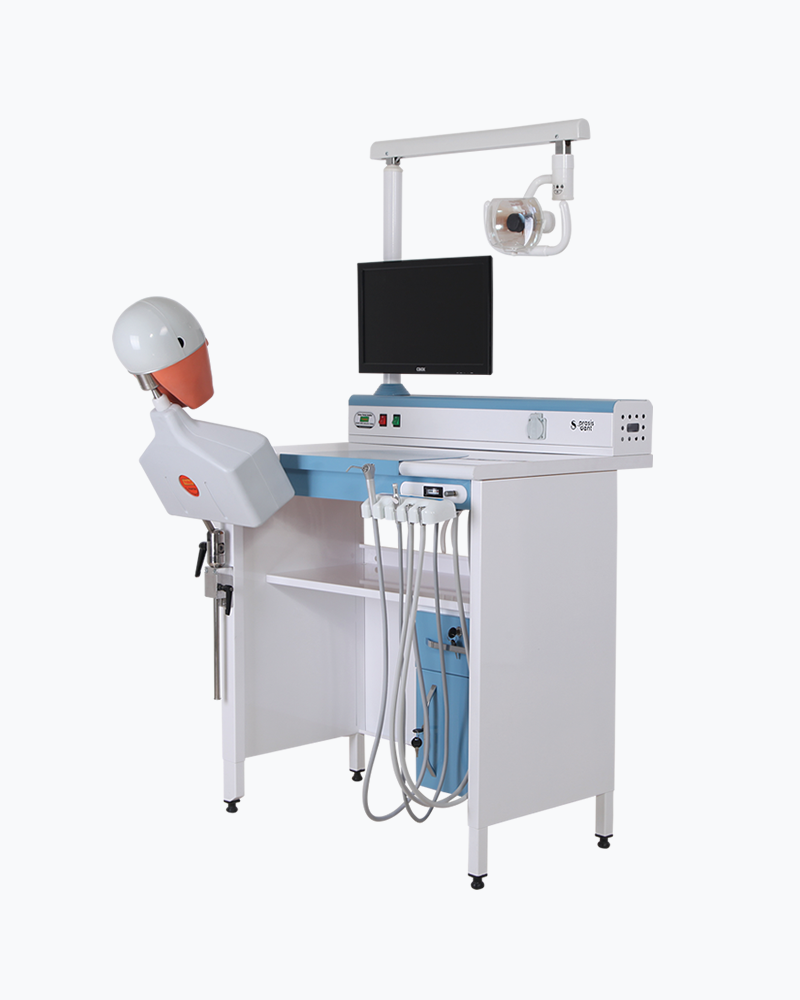
Phantom Student Unit Features
The main components of the phantom student unit are specially designed to allow students to simulate different dental treatment procedures exactly. These components imitate the real tooth structure and jaw movements to provide maximum realism during practice.

Head Model (Phantom Head)
The phantom head is the most fundamental component used in dental applications, designed according to human anatomy.
• Anatomical Structure: The jaw, teeth, and mouth model imitate human anatomy precisely.
• Removable Tooth Models: Equipped with removable and replaceable tooth models to allow students to practice different case scenarios.
• Modular Design: Jaw and mouth structure can be easily adapted to different treatment scenarios.

Jaw Mechanism
The jaw mechanism simulates realistic jaw movements allowing students to work at different angles and positions.
• Occlusion and Bite Function: Facilitates access to real tooth surfaces.
• Dynamic Movement Capability: Both mandibular (lower jaw) and maxillary (upper jaw) parts are movable for more comprehensive practice.

Tooth Models
Tooth models are designed to suit different age groups and case scenarios.
• Deciduous and Permanent Teeth: Simulates the dental structures of different age groups.
• Breakable Tooth Models: Allow students to realistically perform fillings, root canal treatments, and prosthesis work.

Work Desk
Phantom student units come with an ergonomic work desk.
• Adjustable Height and Angle: Ensures students work comfortably.
• Modern Working Conditions: Equipped with lighting, air, and water systems.

Technological Support Systems
Modern phantom units integrate with digital sensors and simulation software to provide feedback mechanisms analyzing student errors.
• Digital Sensors: Analyze the accuracy of students' applications.
• Simulation Software: AI-supported software evaluates performance and suggests improvements.
Phantom student units offer a wide range of training opportunities in dental applications. Students can simulate different treatment procedures exactly on these units to improve their skills.

Restorative Treatments
• Filling procedures
• Cavity preparation
• Tooth surface shaping studies

Endodontic Treatments
• Simulation of root canal treatment procedures

Prosthetic Preparation
• Crown, bridge, and prosthetic planning
• Prosthetic placement procedures

Periodontal Treatments
• Practicing techniques used in the treatment of gum diseases

Tooth Extraction and Surgical Techniques
• Basic surgical procedures
• Tooth extraction procedures

Teeth Cleaning and Polishing
• Cleaning tooth surfaces
• Practicing polishing procedures
Combining Theoretical and Practical Knowledge
Students reinforce their theoretical knowledge by applying it on phantom units. This process facilitates the transition to the clinical environment.

Minimizing Risk of Errors
Allows students to practice without fear of mistakes before working on real patients.

More Comprehensive Training
Phantom units enable working on a wide range of cases. The simulation of various tooth structures and disorders provides students with a more comprehensive education.

Evaluation of Student Performance
Some units digitally analyze the student's work process and offer opportunities to correct errors. This feedback system increases the effectiveness of education.

• Allows students to safely learn treatment procedures before working on real patients.
• Provides the opportunity to practice without fear of making mistakes.
• Helps develop clinical skills at an early stage.
• Offers the opportunity to work on a wide range of cases.
• Increases the success rate of educational institutions.
• Ease of Use: The unit should be easy to install and operate.
• Durability: Manufactured from high-quality materials and should be long-lasting.
• Modularity: Should be configurable according to different case scenarios.
• Technological Compatibility: Should integrate with digital software and simulation tools.
• Alignment with Educational Goals: Should offer features suitable for the objectives of the education program.
Integrates with student phantom units to improve education quality and provide comprehensive feedback.
Phantom Teacher Unit Features
The main components of the teacher unit are specially designed so that instructors can more effectively manage and evaluate student practices.

Control Panel
Allows instructors to manage all student units from a single point. Settings for devices such as air, water, light, and micromotor can be controlled via this panel.
• Easy-to-Use Interface: Has a control interface that instructors can quickly adapt to.
• Connectivity Integration: Works synchronously with all student units.

Visual and Digital Access Systems
The teacher unit is equipped with various visual and digital systems to closely monitor student practices.
• Camera Systems: Built-in camera systems to monitor students' applications in real-time.
• Monitors and Screens: Large screens for detailed observation of student procedures.

Simulation and Interactive Technology
With digital sensors and simulation software, the teacher unit can analyze student practices and provide feedback.
• Simulation Software: AI-supported software evaluates student performance and offers improvement suggestions.
• Feedback Mechanisms: Errors made by students are instantly detected and corrected by the instructor.

Ergonomic Design
Ergonomic design elements are considered to ensure instructor comfort during long training sessions.
• Adjustable Desk and Chair: Ensures instructors can work comfortably.
• Easy Access: Provides quick and easy access to all control systems.
Monitoring and Evaluating Student Practices
Filling, cavity preparation, and prosthetic work done by students are monitored in real-time.

Error Analysis and Providing Feedback
Errors are analyzed using digital systems and feedback is given to the student.

Integration of Educational Materials
Theoretical knowledge is transformed into practical applications using visual and digital resources.

Multi-Student Management
• Allows simultaneous monitoring and group feedback for multiple students.
Facilitating the Education Process
Instructors can easily monitor, analyze, and provide feedback on students’ work through the teacher unit, making the education process more efficient.

Improving Student Performance
Real-time feedback and error correction mechanisms accelerate student learning.

Minimizing Errors
Instructors can instantly detect and correct student mistakes, preventing errors on real patients.

Enhancing Education Quality
Technological support systems improve education quality and ensure students graduate better equipped.
Real-Time Monitoring of Student Practices: Instructors can watch student procedures live and guide them.
Providing Comprehensive Feedback: Student performance is evaluated in detail and deficiencies are immediately addressed.
Facilitating the Education Process with Technological Support: The education process is optimized with digital screens, camera systems, and software support.
Capability to Monitor Multiple Students: Allows simultaneous supervision of several students.
Ease of Use: The unit should be easy to install and operate.
Durability: Manufactured from high-quality materials and should be long-lasting.
Modularity: Should be configurable according to different case scenarios.
Technological Compatibility: Should integrate with digital software and simulation tools.
Alignment with Educational Goals: Should offer features suitable for the objectives of the education program.
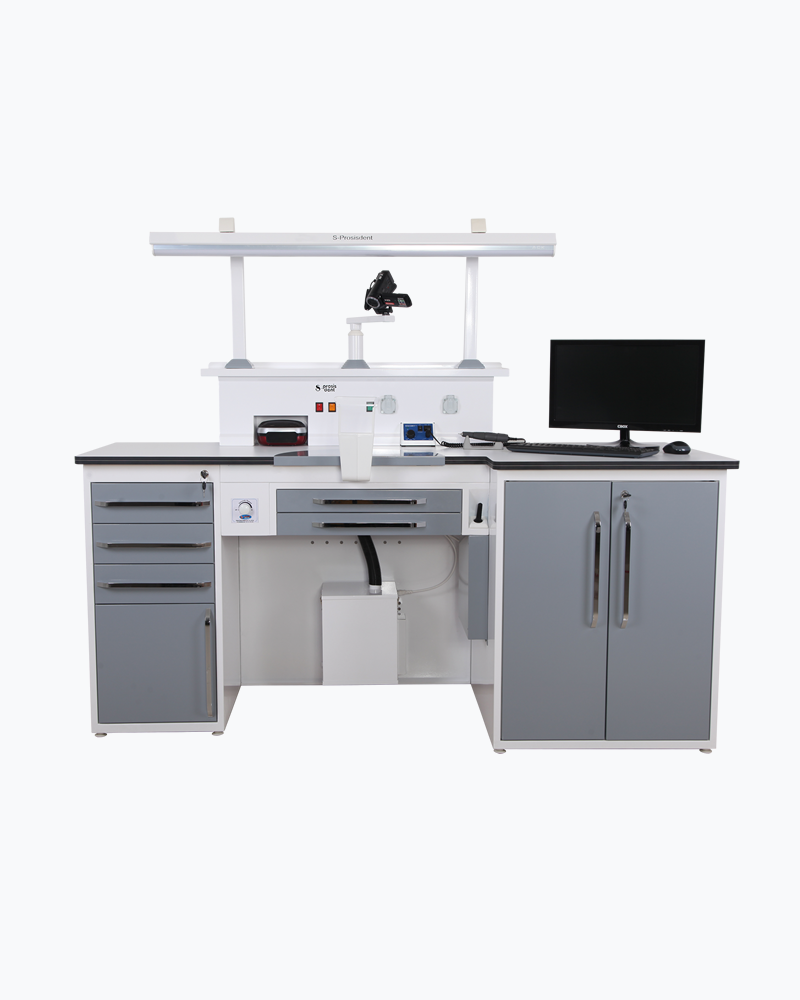
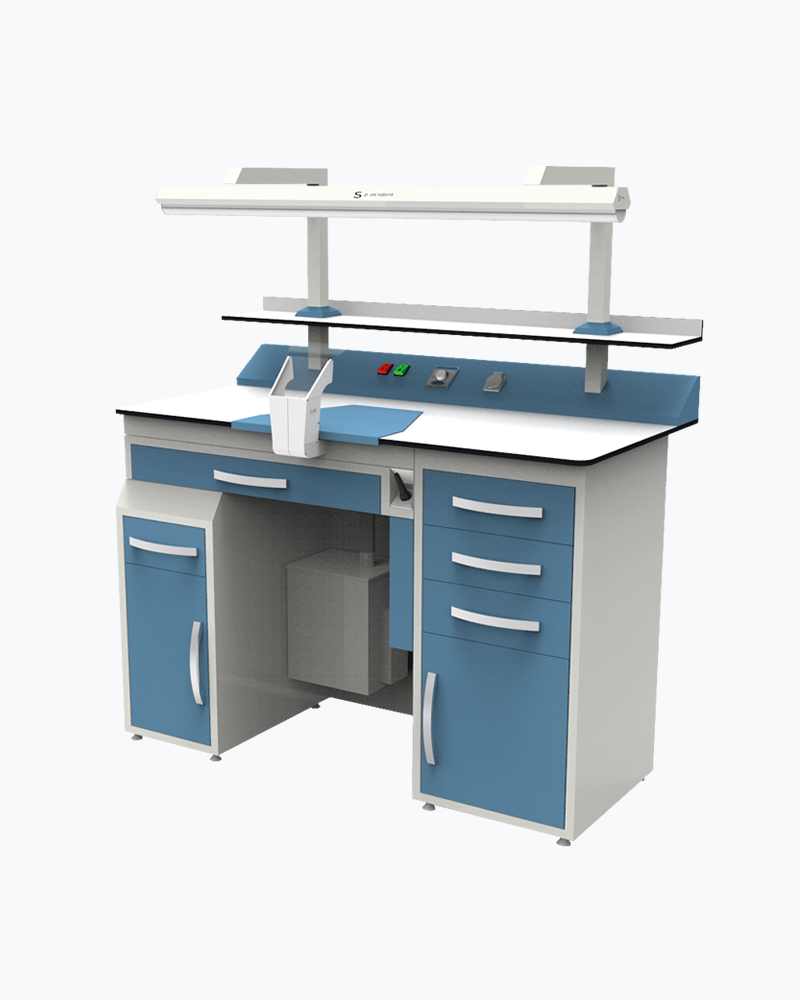
Dental laboratory technician unit; dental prosthetics, modeling, porcelain, and orthodontic work.
Dental Technician Unit Features
Single or Dual Usage Options: Can be configured according to different needs, from independent single technician units to paired dual stations.
Adjustable Work Surface: Desk height and wide surface area designed to fit users of different heights.
Integrated Lighting: LED lamps that create natural light effects, ideal for detailed work.
Air and Electrical Installations: Internal air line connection and multi-outlet system enable easy integration of technical equipment.
Vacuum Aspiration Unit (Optional): Can be integrated with central or local aspiration systems for dusty operations.
Lathe and Micromotor Area: Special areas and connection points designed for comfortable and safe use of precision instruments.
Heat and Chemical Resistant Surface: The tabletop is coated with materials that are scratch-resistant, fireproof, and stain-resistant, suitable for laboratory conditions.
Steel Frame and Modular Shelves: Durable steel construction that withstands heavy equipment, with functional storage areas.
Emergency Power Cut-Off Button: A button that can be used in emergencies for electrical devices, ensuring maximum safety.
Heat Protection Systems: Special protective compartments to safeguard users in thermal processing areas.
Dust Protection Compartments: Separate storage areas for sensitive devices maintain a hygienic working environment.
Live Broadcast Support via Camera: Enables instructors or senior technicians to watch operations live.
Monitor Connection Unit: Allows video or presentation display in the work area.
Drawer Modules: Lockable drawers for organizing tools, equipment, and materials.
Waste Management Unit: Integrated system enabling separation of biological and technical waste.
• Tabletop size,
• Shelf and drawer layout,
• Electrical, air, and vacuum connection points can be customized.
• In dental prosthesis production laboratories,
• In dental technology departments of educational institutions,
• In private clinics' prosthesis workshops,
• Actively used in orthodontic and surgical planning centers.

You can explore other
School Laboratory options.

Let's design your laboratory together!

For the laboratory you need; ORKALAB offers custom solutions focused on durability, efficiency, and safety. Plan your projects with us!

GET A QUOTE NOW
With the most ideal ideas, we design sustainable laboratories suitable for your purpose and budget.

From the very beginning, we offer you the most rational laboratory solutions with our expert team. You can contact us for project design, production, installation, and all the devices and equipment you need.

Orkalab